Custom Hearing Protection in Toronto
Hearing damage does not announce itself. There is no pain, no bleeding, no obvious moment where something breaks. You finish a day at the range, a shift on site, or a long ride home, and everything seems fine. The damage shows up years later, and by then it is permanent.
That is the frustrating part and the hopeful part at once. Noise induced hearing loss is the one kind of hearing loss that is almost entirely preventable. You just have to protect your ears before the damage happens, not after.
At Toronto Hearing Services we fit custom hearing protection at all three of our clinics in North York, Markham, and Etobicoke. Some of it is simple and silent. Some of it is electronic and lets you hear better than you do with nothing in your ears at all. This page explains the difference, decodes the numbers you will see on the packaging, and helps you work out which type suits how you actually spend your time.
The Two Kinds of Hearing Protection
Almost everything on the market falls into one of two categories. Understanding which one you need is the single most useful thing you can do before shopping.
Passive Protection
Passive protection is a physical barrier. A plug fills your ear canal and blocks sound from reaching your eardrum. There is no battery, no electronics, and nothing to charge. It works the same way every second you wear it.
The strength of passive protection is its simplicity. It is reliable, affordable, and there is nothing to break. Custom fit passive plugs made from medical grade silicone seal properly, stay comfortable for hours, and last for years.
The limitation is that a barrier cannot tell the difference between a gunshot and your coworker calling your name. It blocks both. For some situations that is exactly what you want. For others it is a real problem, and it is the reason so many people take their plugs out when they should be leaving them in.
Active Protection
Active protection is electronic. A tiny microphone on the outside of the device picks up the sound around you, a processor decides what to do with it, and a speaker delivers the result into your ear. Quiet sounds pass through, and can even be amplified so you hear them more clearly than you would unaided. The moment something dangerously loud arrives, the device clamps down in a fraction of a second and refuses to pass it along.
The practical effect is strange the first time you experience it. You are wearing hearing protection, and yet you can hear the conversation next to you, the rustle in the brush, the radio call, the sound of a machine changing pitch. Then a shot goes off and it lands as a dull thud instead of a crack.
Active protection costs more and needs charging. What you get for that is the thing passive protection cannot offer: you can keep it in all day without cutting yourself off from your surroundings.
Which One Do You Need
Ask yourself one question. While you are protected, do you still need to hear?
If the honest answer is no, passive protection is the right call. Sleeping, swimming, sitting through a loud concert, running a saw alone in the garage. You are not trying to catch anything, you just want the noise gone.
If the honest answer is yes, you want active. Hunting where you need to hear game and your partner. A job site where safety depends on hearing a shouted warning or a reversing alarm. Riding where you need to catch a siren. Anywhere you have found yourself pulling your plugs out to hear someone, which is the moment your protection stops working.
Plenty of our patients own both. Custom plugs for sleep and swimming, electronic protection for work and range days.
What the Numbers Actually Mean
Hearing protection is sold with a small pile of acronyms on the box. Here is what each one tells you, in plain terms.
NRR (Noise Reduction Rating)
NRR is a measure of how much sound a device blocks, expressed in decibels, and it is the rating you will see on most hearing protection sold in North America. A 26 dB NRR device blocked 26 dB of noise under laboratory conditions.
Two things are worth knowing. Laboratory conditions mean expert fitting and ideal placement, so real world attenuation is usually lower, and safety standards apply a derating formula to account for that. And higher is not automatically better. Overprotection is a genuine problem. If you block more sound than your environment requires, you lose awareness of things you need to hear, you feel isolated, and you end up taking the protection out.
CSA Class
If you have been handed hearing protection at a Canadian workplace, you may have seen a letter rather than a number. That is the CSA classification system, set out in CSA Z94.2, and it sorts devices into Class A, B, or C based on how much noise they block. Class C covers exposure up to 90 dBA, Class B up to 95 dBA, and Class A up to 105 dBA. A letter L after the class means the device also blocks at least 20 dBA of low frequency noise at 125 Hz, which matters around engines and heavy machinery.
The classes are calculated from the same laboratory testing that produces an NRR, so the two systems describe the same underlying performance in different language. Consumer and recreational products in Canada are usually still labelled with an NRR. If your employer has specified a CSA class, bring that requirement to your appointment and we will match it.
Gain
Gain applies only to active protection. It is how much the device amplifies quiet sound, measured in decibels. A device offering up to 30 dB of gain can make faint sounds noticeably louder, which is why hunters and anyone working in a large open space value it.
Gain is the feature people forget to ask about, and it is the reason active protection can leave you hearing better than you would with nothing in your ears.
Output
Output is the ceiling. It is the loudest sound the device will ever deliver into your ear canal, no matter how loud the outside world gets. A device with a 93 dB output will not pass anything above 93 dB to your eardrum, full stop.
Output is the number that makes electronic protection safe, and it is the one most people understand least. Gain tells you how much help you get with quiet sound. Output tells you how well you are protected from loud sound. Together they are the whole story of what an active device does.
Active Protection: SoundGear
SoundGear is built by Starkey, a hearing aid manufacturer with more than fifty years of custom ear technology behind it. That heritage shows up in the fit and in the sound processing, which is considerably more refined than what you find in general purpose electronic muffs. We carry the full SoundGear line at all three clinics.
Phantom
The flagship. Phantom is custom moulded to your ear from an impression we take in clinic, it recharges rather than eating batteries, and it connects to your phone over Bluetooth for calls and audio. It delivers up to 30 dB of gain, holds output to 90 dB, and carries a 22 dB NRR. Battery life runs to roughly 23 hours on a charge of about three and a half hours.
Phantom is also pre programmed for the normal to moderate hearing loss range, which means for a lot of patients it doubles as a light hearing aid. If you have noticed some difficulty in conversation and you also spend time in noise, this is often the product that makes the most sense.
Best for: hunting and sport shooting, law enforcement, motorsport, aviation, construction and trades, agriculture, anyone who wants one device that does everything.

Silver
High definition protection and sound enhancement in a custom made shell, built for all day comfort. Silver offers up to 30 dB of gain, a 95 dB output, and a 24 dB NRR. No Bluetooth and no rechargeable battery, which keeps the price down while keeping the custom fit and the sound quality.
Best for: patients who want custom fit and strong performance without the streaming features.
Shield
Shield is the instant fit option. No impression appointment, no waiting on a lab. It arrives ready to wear with flexible tri flange buds that suit most ear canals, and optional foam buds if you want more attenuation. Up to 26 dB NRR, and available in two output levels: 93 dB for mixed environments, or 80 dB for steady continuous noise. Replaceable buds, a rugged pocket case, and a one year repair warranty.
Best for: a first set of electronic protection, occasional use, or anyone who needs protection today rather than in two weeks.
SoundGear at a Glance
| Phantom | Silver | Shield 93 dB | Shield 80 dB | |
|---|---|---|---|---|
| Fit | Custom | Custom | Universal | Universal |
| NRR | 22 dB | 24 dB | 26 dB | 26 dB |
| Output | 90 dB | 95 dB | 93 dB | 80 dB |
| Gain | Up to 30 dB | Up to 30 dB | Yes | Yes |
| Rechargeable | Yes | No | No | No |
| Bluetooth | Yes | No | No | No |
| Digital modes | Yes | No | No | No |
| Colour options | Yes | Yes | No | No |
| Lanyard | Yes | Yes | Yes | Yes |
| Warranty | 1 year | 1 year | 1 year | 1 year |
Passive Protection: Custom Ear Plugs
Not every situation calls for electronics. For a lot of what people need protection from, a well made custom plug is the better tool.
Solid Plugs
Soft, high strength silicone moulded to your exact ear canal. Maximum attenuation, nothing to adjust, nothing to fail. Around 26 dB NRR. These are our workhorse for industrial noise, loud recreation, and anywhere you simply want the sound reduced and do not need to hear anything.
Filtered Plugs
A filtered plug lowers volume evenly across the frequency range instead of cutting the highs harder than the lows. Music and voices stay clear and natural, just quieter. Filters are available in several strengths so we can match the level of reduction to your environment rather than giving you more than you need.
This is the type musicians use, and if that is your situation our musician ear plugs page goes into more detail.
High Frequency Noise Filters
Also sold as Hocks Noise Braker. A patented acoustic chamber and filter that brings sound down to a safe level while keeping speech intelligible. Popular on the range and in workplaces where communication matters.
Phonak Serenity Choice
We also fit the Phonak Serenity Choice range, which preserves acoustic integrity with less distortion than standard plugs. A good option for work environments where you need to stay aware of what is happening around you without going electronic.
Swim Plugs
A proper seal keeps water out of the ear canal, which matters if you are prone to swimmer’s ear, have had ear surgery, or have tubes fitted. This is the most common request we get from parents, and custom swim plugs are floatable, brightly coloured, and far more effective than the drugstore alternative.
Sleep Plugs
Made from softer silicone with a low profile so you can lie on your side without pressure. For shift workers sleeping during the day, light sleepers, and anyone sharing a bed with a snorer.
Protection by Activity
Hunting and Sport Shooting
A single gunshot can exceed 150 dB. That is enough to cause permanent, instant damage from one unprotected round, and it is why hearing loss is so common among lifelong shooters.
Electronic protection solves the problem that keeps people from wearing anything at all. You hear the conversation, the dogs, the movement in the brush, and the blast still gets cut off before it reaches your eardrum.
Work and Industrial Noise
Tools, engines, compressors, and machinery build damage cumulatively. There is no single moment where it goes wrong, which is what makes it so easy to ignore.
In Ontario, workplace noise exposure is regulated and your employer has obligations around protection. If a CSA class has been specified for your role, bring that information to your appointment and we will match it.
Motorcycling and Driving
Inside a helmet at highway speed, wind noise runs roughly 95 to 105 dB, and at track speeds it climbs past 120. That is damaging territory for any ride longer than a few minutes. Low profile plugs cut the wind roar while leaving sirens, traffic, and engine note audible.
Drivers are not exempt. Long stretches with the window down produce the same kind of sustained exposure, and it is a recognised contributor to asymmetric hearing loss on the driver’s side.
Yard Work and the Garage
A lawnmower is easy to dismiss because you are only out there for half an hour. Half an hour every week or two across a summer adds up to something in the range of 800 minutes of exposure, and that is before the leaf blower, the saw, and whatever you have running in the garage. Cumulative damage does not care that each session was short.
Why Custom Fit Is Worth It
Drugstore foam plugs do work, when they are inserted correctly and seated deeply enough. In practice most people do neither. The plug sits too shallow, the seal is imperfect, and the actual protection falls well short of what the packaging promised.
Every ear canal is a different shape. A custom plug is moulded from an impression of yours, so it seals the same way every time without any technique on your part. It stays put, it stays comfortable through a full day, and it does not need replacing every few uses.
If you need protection once or twice a year, a universal fit option is perfectly sensible. If you are protecting your hearing regularly, custom fit is the difference between protection you actually wear and protection that lives in a drawer.
What Happens at Your Appointment
Most people put this off because they do not know what is involved. It is short and it is easy.
We talk about your noise. Where it comes from, how loud, how often, and whether you need to stay aware of your surroundings while you are protected. This is what determines which product suits you.
We look in your ears. A quick check with an otoscope to confirm your canals are clear and healthy. If there is wax in the way we deal with that first, since an impression taken around wax will not fit properly.
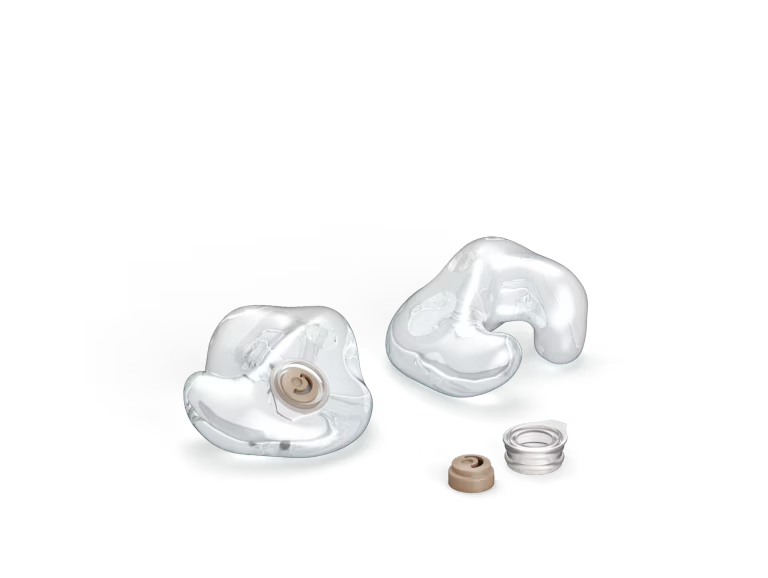
We take impressions, if you are going custom. A soft material is placed in your ear and sets in a few minutes. It is painless and slightly odd feeling, and the whole appointment usually takes about 30 minutes.
Your devices arrive and we fit them. You come back, we check the seal, adjust anything that needs adjusting, and show you how to wear and care for them. For electronic devices we set them up for your environment and walk you through charging and any app features.
Instant fit options like SoundGear Shield can often be sorted in a single visit.
Common Questions
How long do custom ear plugs last?
Solid and filtered silicone plugs typically last several years with reasonable care. Ears do change shape gradually over time, so if the seal starts to feel loose or the plug works its way out, it is time for new impressions.
Will hearing protection make me miss important sounds?
That depends entirely on which type you choose. Passive protection reduces everything. Active protection is designed specifically to keep speech and environmental sound available while suppressing the dangerous peaks. If awareness matters in your situation, tell us and we will point you toward active.
Is hearing protection covered by insurance?
Coverage varies by plan. Some extended health benefits include custom hearing protection, and workplace required protection is sometimes covered by the employer. Bring your plan details and we will help you check.
Can I wear hearing protection if I already have hearing loss?
Yes, and it is more important than ever, because damaged ears are more vulnerable to further damage. Some devices, including SoundGear Phantom, provide amplification alongside protection. If you have hearing loss and noise exposure, mention both at your appointment.
What is the difference between NRR and CSA class?
They measure the same thing in different formats. NRR is a decibel figure common on North American consumer products. CSA class is a letter grade used in Canadian workplace settings, matched to the noise level you are exposed to. Both come from the same laboratory testing.
Do I need an appointment for SoundGear Shield?
Not strictly, since Shield is instant fit and ready out of the box. We still recommend coming in so we can confirm the bud size seals properly in your canal, because a poor seal undermines the rating.
Protect It Before You Lose It
Hearing loss from noise is permanent and it is preventable. Those two facts together are the entire argument for getting fitted.
Book a hearing protection consultation at whichever of our clinics is closest. We will work out what your noise exposure actually requires and fit you with protection you will wear.
The Audiology Centre
Business Hours:
Monday - Thursday: 8:00 am - 4:30 pm
Friday: 8:00 am - 1:00 pm
Address: 1333 Sheppard Ave E #340, North York, ON M2J 1V1, Canada
Phone: (416) 498-4151
FAX: 416-498-1589
Markham Stouffville Hearing Services
Business Hours:
Monday - Thursday: 8:00 am - 5:00 pm
Friday: 8:00 am - 1:30 pm
Address: 377 Church St #203, Markham, ON L6B 1A1, Canada
Phone: (905) 471-4327
FAX: 905-471-4338
West End Hearing Services
Business Hours:
Tuesday - Thursday: 8:00 am - 4:30 pm
Monday & Friday: Closed
Address: 1243 Islington Ave #711, Etobicoke, ON M8X 1Y9, Canada
Phone: (416) 233-8581
FAX: 416-233-4390